El Cine, como cualquier otro resultado de la subjetividad, crea y modifica realidades, redescubre nuestros procesos mentales, amplía nuestras capacidades cognitivas y en cierta medida redefine la manera de relacionarnos con el mundo.

Películas de interés:
Christopher Nolan- Inception (2010)
Jim Jarmush- The Limits of control (2009)
John Frankenheimer - Seconds (1966)
Andrej Tarkovskij- Stalker (1979
Solyaris (1972)
Danny Lerner - Yamim Kfuim (2005)
Lars von Trier - Antichrist (2009)
Sean Ellis - The Broken (2008)
Stanley Kubrick - A Clockwork Orange (1971)
Ingmar Bergman - Tystnaden (1963)
Persona (1966)
Luis Buñuel - Un chien andalou (1929)
Martin Šulík - Záhrada (1995)
www.surrealmoviez.info
Comparto las bibliografías de mis directores favoritos (tomado de surrealmoviez)
Andrei Tarkovsky (1932 - 1986)

The most famous Soviet film-maker since Sergei M. Eisenstein, Andrei Tarkovsky (the son of noted poet Arseniy Tarkovsky) studied music and Arabic in Moscow before enrolling in the Soviet film school VGIK. He shot to international attention with his first feature, Ivanovo detstvo (1962), which won the top prize at the Venice Film Festival. This resulted in high expectations for his second feature _Andrei Rublyov (1969)_, which was banned by the Soviet authorities until 1971. It was shown at the 1969 Cannes Film Festival at 4 o'clock in the morning on the last day, in order to prevent it winning a prize - but it won one nonetheless, and was eventually distributed abroad partly to enable the authorities to save face. Solyaris (1972), had an easier ride, being acclaimed by many in the West as the Soviet answer to Kubrick's '2001' (though Tarkovsky himself was never too fond of it), but he ran into official trouble again with Zerkalo (1975), a dense, personal web of autobiographical memories with a radically innovative plot structure. Stalker (1979) had to be completely reshot on a dramatically reduced budget after an accident in the laboratory destroyed the first version, and after Nostalghia (1983), shot in Italy (with official approval), Tarkovsky defected to the West. His last film, Offret (1986) was shot in Sweden with many of Ingmar Bergman's regular collaborators, and won an almost unprecedented four prizes at the Cannes Film Festival. He died of cancer at the end of the year.
IMDB link: http://www.imdb.com/name/nm0001789/
Filmography:
1. Offret / The Sacrifice (1986)
2. Nostalghia (1983)
3. Tempo di viaggio / Voyage in Time (1983)
4. Stalker (1979)
5. Zerkalo / The Mirror (1975)
6. Solyaris / Solaris (1972)
7. Andrey Rublyov / Andrei Rublev (1969)
8. Ivanovo detstvo / Ivan's Childhood (1962)
9. Katok i skripka / The Skating Rink and the Violin (1961)
10. Segodnya uvolneniya ne budet / There Will Be No Leave Today (1959)
11. Ubiytsy / The Killers (1958)
| Posted on 26-02-2008 16:40 |

|

Jean-Luc Godard (born 3 December 1930) is a French and Swiss filmmaker and one of the most influential members of the Nouvelle Vague, or "French New Wave".
Born to Franco-Swiss parents in Paris, he was educated in Nyon, Switzerland, later studying at the Lycée Rohmer, and the Sorbonne in Paris, where he studied ethnology. During his time at the Sorbonne, he became involved with the young group of filmmakers and film theorists that gave birth to the New Wave.
Known for stylistic implementations that challenged, at their focus, the conventions of Hollywood cinema, he became universally recognized as the most audacious and radical of the New Wave filmmakers. He adopted a position in filmmaking that was unambiguously political. His work reflected a fervent knowledge of film history, a comprehensive understanding of existential and Marxist philosophy, and a scholarly disposition that placed him as the lone filmmaker among the public intellectuals of the Rive Gauche.
Godard worked as the press attache for "Artistes Associés", and made his first French film entitled _Tous les garçons s'appellent Patrick (1957) (Charlotte et Véronique). In 1958, he shot Charlotte et son Jules (1960) (Charlotte and Her Boyfriend), his own homage to Jean Cocteau. Later that year, he took unused footage of a flood in Paris shot by Truffaut and edited a film called Une histoire d'eau (1961) (A Story of Water) which was an homage to Mack Sennett. In 1959, he worked with Truffaut on the weekly publication "Temps de Paris". Godard wrote a gossip column for the journal, but also spent much time writing scenarios for films and a body of critical writings which placed him firmly in the forefront of the 'nouvelle vague' aesthetic, precursing the French New Wave. It was also this year that Godard began work on À bout de souffle (1960) (Breathless). In 1960, Godard married Anna Karina in Switzerland. In April and May, he shot Petit soldat, Le (1963) in Geneva and was preparing the film for a fall release in Paris. However, French censors banned the film due to its references to the Algerian war, and it was not shown until 1963. In March, 1960, À bout de souffle (1960) premiered in Paris. It was hugely successful both with the film critics and at the box office, and became a landmark film in the French New Wave with its references to American cinema, its jagged editing, and overall romantic/cinephilia approach to filmmaking. The film propelled the popularity of the male lead Jean-Paul Belmondo with European audiences. In 1961, Godard shot Une femme est une femme (1961) which was his first film using color wide-screen stock. Later that year, he participated in the collective effort to remake the film Sept péchés capitaux, Les (1962), which was heralded as an important project in artistic collaboration. In 1962, Godard shot Vivre sa vie: Film en douze tableaux (1962) in Paris, his first commercial success since À bout de souffle (1960).
Later that year, he shot a segment entitled Le Nouveau Monde for the collective film RoGoPaG, another important work in the history of collaborative multiple-authored art. In 1963, Godard completed a film in homage to Jean Vigo entitled Carabiniers, Les (1963) which was a breath-taking failure with the public and stirred furious controversy with film critics. Also this year, he worked on a couple of collective films: Plus belles escroqueries du monde, Les (1964) (from which Godard's sequence was later cut) and Paris vu par... (1965). In 1964, Godard and his wife Anna Karina formed their own production company called 'Anouchka Films.' They shot a film called _Une femme mariée (1964)_ which censors forced them to re-edit due to a topless sunbathing scene shot by Jacques Rozier. The censors also made Godard change the title to _Une femme mariée (1964)_ so as to not give the impression that this 'scandalous' woman was the typical French wife. Later in the year, two French television programs were produced in devotion to Godard's work. In the spring of 1965, Godard shot Alphaville, une étrange aventure de Lemmy Caution (1965) in Paris; in the summer, he shot Pierrot le fou (1965) in Paris and the south of France; shortly thereafter, he and Anna Karina separated. Following their divorce, Godard shot the film Made in U.S.A. (1966), _Deux ou trois choses que je sais d'elle (1966), L'amour en l'an 2000 (sequel to Alphaville shot as a sketch for the collective film L'amour travers les ages). In 1967, Godard shot Chinoise, La (1967) in Paris with the actress Anne Wiazemsky, who was the granddaughter of the French novelist François Mauriac. During the making of the film, Godard and Wiazemsky were married in Paris. Later in the year, he was prevented from traveling to North Vietnam for the shooting of a sequence for the collective film Loin du Vietnam (1967). He instead shot the sequence in Paris, entitled Camera-Oeil. Also during 1967, Godard participated (as the only Frenchman) on an Italian collective film called Amore e rabbia (1969). In 1968, Godard was commissioned by French television to make the film _Gai savoir, Le (1968)_ . However, television producers were outraged by the product Godard produced, and they refused to show it. In May of 1968, Godard was furious with the firing of Henri Langlois as the head of the French Jean-Pierre Gorin to form the 'Dziga-Vertov' group.
Godard became increasingly concerned with socialist solutions to an idealist cinema, especially in providing the proletariat with the means of production and distribution. Along with other militantly political filmmakers in the Dziga-Vertov group, Godard published a series of 'Ciné-Tracts' outlining these viewpoints. In the Summer of 1968, Godard travelled to New York City and Berkeley California to shoot the film One American Movie, which was never completed. In September he made a trip to Canada to start another film called Communication(s) which was also left unfinished, and then made a visit to Cuba before returning to France. In 1969, Godard traveled to England where he made the film British Sounds for BBC Weekend Television, which later refused to show it. In the late Spring he traveled with the Dziga-Vertov group to Prague to secretly shoot the film Pravda. Later that year he shot Lotte in Italia (Struggle for Italy) for Italian television. It was never shown. In 1970, Godard traveled to Lebanon to shoot a film for the Palestinian Liberation Organization entitled Jusque à la victoire (Until Victory). Later that year he traveled to dozens of American universities trying to raise money for the film. In spite of his efforts, it was never released.
IMDB Link: http://imdb.com/name/nm0000419/
Filmography:
+1. Film Socialisme (2010)
1. Vrai faux passeport (2006)
2. Notre musique (2004) aka Our Music
3. Moments choisis des histoire(s) du cinéma (2004)
4. Ten Minutes Older: The Cello (2002) (segment) "Dans le noir du temps"
5. Liberté et patrie (2002) (V) aka Liberty and Homeland
6. Éloge de l'amour (2001) aka In Praise of Love
7. Origine du XXIème siècle, L' (2000) aka Origins of the 21st Century
8. Histoire(s) du cinéma: Une vague nouvelle (1998)
9. The Old Place (1998)
10. Histoire(s) du cinéma: Le contrôle de l'univers (1998)
11. Histoire(s) du cinéma: La monnaie de l'absolu (1998)
12. Histoire(s) du cinéma: Les signes parmi nous (1998)
13. Histoire(s) du cinéma: Seul le cinéma (1997)
14. Histoire(s) du cinéma: Fatale beauté (1997)
15. For Ever Mozart (1996)
16. JLG/JLG - autoportrait de décembre (1995)
17. Deux fois cinquante ans de cinéma français (1995) aka 2 x 50 Years of French Cinema
18. Comment vont les enfants (1993) (segment) "L'enfance de l'art" aka How Are the Kids?
19. Hélas pour moi (1993) Alas for Me
20. Je vous salue, Sarajevo (1993)
21. Les Enfants jouent à la Russie (1993) aka Children Play Russian
22. Allemagne 90 neuf zéro (1991) Germany Year 90 Nine Zero
23. Contre l'oubli (1991) (segment) "Pour Thomas Wainggai, Indonésie" aka Against Oblivion
24. Nouvelle vague (1990) aka New Wave
25. Histoire(s) du cinéma: Une histoire seule (1989)
26. Rapport Darty, Le (1989)
27. "Français vus par, Les" (1988) (segment) "Le dernier mot" aka The Cowboy and the Frenchman (USA: DVD title)
28. Histoire(s) du cinéma: Toutes les histoires (1988)
29. Puissance de la parole (1988) aka The Power of Speech
30. On s'est tous défilé (1988)
31. Soigne ta droite (1987) aka Keep Your Right Up
32. King Lear (1987)
33. Aria (1987) (segment) "Armide"
34. Série noire: Grandeur et décadence d'un petit commerce de cinéma (1986)
35. Soft and Hard (1986)
36. Meetin' WA (1986) aka Meeting Woody Allen
37. Détective (1985)
38. 'Je vous salue, Marie' (1985) aka Hail Mary
39. Prénom Carmen / First Name: Carmen (1983)
40. Petites notes à propos du film 'Je vous salue, Marie' (1983)
41. Passion (1982) aka Godard's Passion
42. Changer d'image, ou lettre à la bien-aimée (1982)
43. Scénario du film 'Passion' (1982)
44. Lettre à Freddy Buache (1981) aka A Letter to Freddy Buache
45. Sauve qui peut (la vie) (1980) a.k.a. Slow Motion
46. Scénario de 'Sauve qui peut la vie' (1979)
47. Comment ça va? (1978) aka How Is It Going?
48. "France/tour/detour/deux/enfants" (1977)
49. Ici et ailleurs (1976) aka Here and Elsewhere
50. Six fois deux/Sur et sous la communication (1976)
----Episode 1A: Y'a personne / There is nobody
----Episode 1B: Louison
----Episode 2A: Leçon de choses / Lessons about Things
----Episode 2B: Jean-Luc
----Episode 3A: Photos et Cie
----Episode 3B: Marcel
----Episode 4A: Pas d'histoires / No stories
----Episode 4B: Nanas
----Episode 5A: Nous trois
----Episode 5B: René(e)
----Episode 6A: Avant et après / Before and after
----Episode 6B: Jacquelines et Ludovic
51. Numéro deux (1975) aka Number Two
52. Letter to Jane: An Investigation About a Still (1972)
53. Tout va bien (1972) aka All's Well
54. One P.M. (1972)
55. Lotte in Italia (1971) aka Struggle in Italy
56. Vent d'est, Le (1970) aka East Wind
57. British Sounds (1970)
58. Pravda (1970)
59. Vladimir et Rosa (1970)
60. Le Gai Savoir (1969) aka The Joy of Learning
61. Amore e rabbia (1969) (segment) "L'Amore"
62. Sympathy for the Devil (1968)
63. Cinétracts (1968) (segments 14, 16, 23) (uncredited)
64. Un film comme les autres (1968)
65. Week End (1967)
66. Loin du Vietnam (1967)(segment) "Camera-Eye" aka Far from Vietnam (USA)
67. Chinoise, La (1967)
68. Plus vieux métier du monde, Le (1967) (segment) "Anticipation, ou l'amour en l'an 2000"aka The Oldest Profession
69. 2 ou 3 choses que je sais d'elle (1967) aka Two or Three Things I Know About Her
70. Made In USA (1966)
71. Masculin féminin: 15 faits précis (1966)
72. Pierrot le fou (1965)
73. Paris vu par... (1965) aka Six in Paris (segment "Montparnasse-Levallois")
74. Alphaville, une étrange aventure de Lemmy Caution (1965)
75. Une femme mariée: Suite de fragments d'un film tourné en 1964 (1964)
76. Plus belles escroqueries du monde, Les (1964) (segment) "Grand escroc, Le" aka The Beautiful Swindlers
77. Bande à part (1964) aka Band of Outsiders
78. Reportage sur Orly (1964)
79. Mépris, Le / Contempt (1963)
80. Carabiniers, Les (1963) aka The Carabineers
81. Ro.Go.Pa.G. (1963) (segment) "Nuovo mondo, Il" aka Let's Have a Brainwash
82. Petit soldat, Le (1963) aka The Little Soldier
83. Vivre sa vie: Film en douze tableaux (1962)
84. Sept péchés capitaux, Les (1962) (segment) "Paresse, La"
85. Une femme est une femme (1961)
86. Une histoire d'eau (1961) aka A Story of Water
87. Charlotte et son Jules (1960) aka Charlotte and Her Boyfriend
88. À bout de souffle / Breathless (1960)
89. Charlotte et Véronique, ou Tous les garçons s'appellent Patrick (1959) aka All the Boys Are Called Patrick
90. Une femme coquette (1955)
91. Opération 'Béton' (1954)aka Operation Concrete

Luis Buñuel Portolés (February 22, 1900 – July 29, 1983) was a Spanish filmmaker who worked mainly in Mexico and France, but also in his native country and the United States. He is considered one of the most important directors in the history of cinema.
He co-wrote and then filmed a 16-minute short film Un chien andalou (1929) with Dalí. This film, featuring a series of startling and sometimes horrifying images of Freudian nature (such as what appears to be the slow slicing of a woman's eyeball with a razor blade) was enthusiastically received by French surrealists of the time, and continues to be shown regularly in film societies to this day.
He followed this with L'Âge d'Or (1930), partly based on the Marquis de Sade's 120 Days of Sodom. Buñuel's films were famous for their surreal imagery; they include scenes in which chickens populate nightmares, women grow beards, and aspiring saints are desired by luscious women. Even in the many movies he made for hire (rather than for his own creative reasons), such as Susana, Robinson Crusoe, and The Great Madcap, he always added his trademark of disturbing and surreal images. Running through his own films is a backbone of surrealism; Buñuel's world is one in which an entire dinner party suddenly finds themselves inexplicably unable to leave the room and go home, a bad dream hands a man a letter which he brings to the doctor the next day, and where the devil, if unable to tempt a saint with a pretty girl, will fly him to a disco. Buñuel never explained or promoted his work. On one occasion, when his son was interviewed about The Exterminating Angel, Buñuel instructed him to give facetious answers; for example, when asked about the presence of a bear in the socialites' house, Buñuel fils claimed it was because his father liked bears. Similarly, the several repeated scenes in the film were explained as having been put there to increase the running time.

IMDB Link: http://imdb.com/name/nm0000320/
Filmography:
1. That Obscure Object of Desire / Cet obscur objet du désir(1977)
2. The Phantom of Liberty / Fantôme de la liberté, Le (1974)
3. The Discreet Charm of the Bourgeoisie / Charme discret de la bourgeoisie, Le (1972)
4. Tristana (1970)
5. The Milky Way / Voie lactée, La (1969)
6. Beauty of the Day / Belle de jour (1967)
7. Simon of the Desert / Simón del desierto (1965)
8. Diary of a Chambermaid / Journal d'une femme de chambre, Le (1964)
9. The Exterminating Angel / Ángel exterminador, El (1962)
10. Viridiana (1961)
11. The Young One (1960)
12. Fièvre monte à El Pao, La (1959)
13. Nazarín (1959)
14. Mort en ce jardin, La (Death in the Garden) (1956)
15. That Is the Dawn / Cela s'appelle l'aurore (1956)
16. The River and Death / Río y la muerte, El (1955)
17. The Criminal Life of Archibaldo de la Cruz / Ensayo de un crimen (1955)
18. The Adventures of Robinson Crusoe (1954)
19. Wuthering Heights / Abismos de pasión (1954)
20. Illusion Travels by Streetcar / Iusión viaja en tranvía, La (1954)
21. El/ This Strange Passion(1953)
22. El Bruto (1953)
23. A Woman Without Love / Mujer sin amor, Una (1952)
24. Ascent to Heaven / Subida al cielo (1952)
25. Daughter of Deceit / Hija del engaño, La (1951)
26. Susana: The Devil and the Flesh (1951)
27. The Young and the Damned / Olvidados, Los (1950)
28. The Great Madcap / Gran Calavera, El (1949)
29. Gran Casino (Tampico) (1947)
30. Guard! Alert! / Centinela, alerta! (1937)
31. Who Loves Me? / Quién me quiere a mí? (1936)
32. Hurdes, Las / Land Without Bread (1933)
33. The Golden Age / Âge d'or, L' (1930)
34. Un chien andalou (1929)

Pier Paolo Pasolini (March 5, 1922 – November 2, 1975) was an Italian poet, intellectual, film director, and writer.
Pasolini distinguished himself as a philosopher, linguist, novelist, playwright, filmmaker, newspaper and magazine columnist, actor, painter and political figure. He demonstrated a unique and extraordinary cultural versatility, in the process becoming a highly controversial figure.
Pasolini's first novel, Ragazzi di vita (1955), dealt with the Roman lumpen proletariat. The resulting obscenity charges against him were the first of many instances where his art provoked legal problems, and again, with Accattone (1961), also about the Roman underworld, like-wise provoked moralistic conflict with conservatives, who demanded stricter censorship.
He then directed the black-and-white The Gospel According To St. Matthew (1964). This film is widely hailed the best cinematic adaptation of the life of Jesus (Enrique Irazoqui). Whilst filming it, Pasolini vowed to direct it from the "believer's point of view", but later, upon viewing the completed work, saw he had instead expressed his own beliefs.
In his 1966 film, Uccellacci e uccellini (Italian: Bad Birds and Little Birds; English: 'The Hawks and the Sparrows), a picaresque - and at the same time mystic - fable, he wanted the great Italian comedian Totò to work with one of his preferred "naif" actors, Ninetto Davoli. It was a unique opportunity for Totò to demonstrate that he was a great dramatic actor as well.
In Teorema (Theorem, 1968), starring Terence Stamp as a mysterious stranger, he depicted the sexual coming-apart of a bourgeois family (later repeated by François Ozon in Sitcom).
Later movies centered on sex-laden folklore, such as Il fiore delle mille e una notte (Arabian Nights, 1974), Boccaccio's Decameron (1971) and Chaucer's Canterbury Tales (1972), on to the Trilogy of Life. His final work, the only one from the expected Trilogy of Death, Salò (1975), exceeded what most viewers could then stomach in its explicit scenes of intensely sadistic violence. Based on the novel 120 Days of Sodom by the Marquis de Sade, it continues to be his most controversial film; in May 2006, Time Out's Film Guide named it the Most Controversial Film of all time.
IMDB Link: http://imdb.com/name/nm0001596/
Filmography:
1. Salo, or the 120 Days of Sodom / Salò o le 120 giornate di Sodoma (1975)
2. Flower of the Arabian Nights / Fiore delle mille e una notte, Il (1974)
3. Pasolini e... la forma della città (1974)
4. The Canterbury Tales / Racconti di Canterbury, I (1972)
5. Document on Giuseppe Pinelli / 12 dicembre (1972)
6. The Decameron / Decameron, Il (1971)
7. Mura di Sana, Le (1971) aka The Walls of Sana'a
8. Notes for an African Orestes / Appunti per un'Orestiade africana (1970)
9. Appunti per un romanzo dell'immondezza (1970)
10. Medea (1969)
11. Pigpen / Porcile (1969)
12. Love and Anger / Amore e rabbia (1969) (segment: La sequenza del fiore di carta)
13. Teorema (1968)
14. Appunti per un film sull'india (1968)
15. Caprice Italian Style / Capriccio all'italiana (1968) (segment: Che cosa sono le nuvole?)
16. Oedipus Rex / Edipo re (1967)
17. The Witches / Streghe, Le (1967) (segment: La Terra vista dalla luna) OR Here
18. The Hawks and the Sparrows / Uccellacci e uccellini (1966)
19. Sopralluoghi in Palestina per il vangelo secondo Matteo (1965)
20. Comizi d'amore (1965)
21. Padre selvaggio, Il (1965)
22. The Gospel According to St. Matthew / Vangelo secondo Matteo, Il (1964)
23. Rabbia, La (1963) (part I)
24. Let's Have a Brainwash / Ro.Go.Pa.G. (1963) (segment: Ricotta, La)
25. Mamma Roma (1962)
26. Accattone (1961)
Documentaries:
La Fine di Salò [2008] aka The End of Salò
Walking with Pasolini (2008)
Open Your Eyes! (2008)
Pasolini Prossimo Nostro (2006)
Salò - d'hier à aujourd'hui (2002)
Enfants de Salo (2002)
Wie de Waarheid Zegt Moet Dood (1981) aka Whoever Says the Truth Shall Die
Pier Paolo Pasolini: A Film Maker's Life (1971)
Cinéastes de notre temps: Pasolini l'enragé (1966)
Arruso (2000)
Pasolini intervista: Ezra Pound (1967)

Krzysztof Kieślowski (June 27, 1941 Warsaw, Poland – March 13, 1996 Warsaw, Poland) was an influential Oscar-nominated Polish film director and screenwriter, known internationally for his film cycles Three Colors and The Decalogue.
His first non-documentary feature, Personnel (1975), was made for television and won him first prize at the Mannheim Film Festival. Both Personnel and his next feature, The Scar, were works of social realism with large casts: Personnel was about technicians working on a stage production, based on his early college experience, and The Scar showed the upheaval of a small town by a poorly-planned industrial project. These films were shot in a documentary style with many nonprofessional actors; like his earlier films, they portrayed everyday life under the weight of a flawed system, but without overt commentary.
Camera Buff (1979) (which won the grand prize at the Moscow International Film Festival) and Blind Chance (1981) continued along similar lines, but focused more on the ethical choices faced by a single character rather than a community. During this period, Kieślowski was considered part of a loose movement with other Polish directors of the time, including Janusz Kijowski, Andrzej Wajda, and Agnieszka Holland, called the Cinema of Moral Anxiety. His links with these directors (Holland in particular) caused some raised eyebrows within the Polish government, and each of his early films was subjected to censorship and enforced re-shooting/re-editing, if not banned outright (Blind Chance was not released domestically until 1987, almost six years after it was completed).
No End (1984) was perhaps his most clearly political film, depicting political trials in Poland during martial law, from the unusual point of view of a lawyer's ghost and his widow. It was harshly criticized by both the government and dissidents. Starting with No End, Kieślowski's career was closely associated with two regular collaborators, the screenwriter Krzysztof Piesiewicz and the composer Zbigniew Preisner. Piesiewicz was a trial lawyer whom Kieślowski met while researching political trials under martial law for a planned documentary on the subject; Piesiewicz co-wrote the screenplays for all of Kieślowski's subsequent films. Preisner provided the musical score for No End and most of the subsequent films; the score often plays a prominent part in Kieślowski's films and many of Preisner's pieces are referred to within the films themselves. In these cases, they are usually discussed by the films' characters as being the work of the (fictional) Dutch composer Van den Budenmayer.
The Decalogue (1988), a series of ten short films set in a Warsaw tower block, each nominally based on one of the Ten Commandments, was created for Polish television with funding from West Germany; it is now one of the most critically acclaimed film cycles of all time. Co-written by Kieślowski and Piesiewicz, the ten one-hour-long episodes had originally been intended for ten different directors, but Kieślowski found himself unable to relinquish control over the project; in the end, each episode featured a different director of photography. Episodes five and six were also filmed in longer feature-length versions, and released internationally as A Short Film About Killing and A Short Film About Love respectively. Kieślowski had also planned to shoot a full-length version of Episode 9 under the title A Short Film About Jealousy, but exhaustion eventually prevented him from making what would have been his thirteenth film in less than a year.
IMDB Link: http://imdb.com/name/nm0001425/
Filmography:
1. Trois couleurs: Rouge / Red (1994)
2. Trois couleurs: Blanc / White (1994)
3. Trois couleurs: Bleu / Blue (1993)
4. The Double Life of Veronique / Double vie de Véronique, La (1991)
5. "Dekalog" The Decalogue (1989-1990)
6. City Life (1990)
7. A Short Film About Love / Krótki film o milosci (1988)
8. A Short Film About Killing / Krótki film o zabijaniu (1988)
9. Siedem dni w tygodniu (1988) Seven Days a Week
10. Przypadek (1987) Blind Chance
11. No End / Bez konca (1985)
12. Krótki dzien pracy (1981) Short Working Day
13. Spokój (1980) aka Peace
14. Talking Heads / Gadajace glowy (1980)
15. Dworzec (1980) Railway Station
16. Camera Buff / Amator (1979)
17. Seven Women of Different Ages / Siedem kobiet w róznym wieku (1979)
18. Night Porter's Point of View / Punktu widzenia nocnego portiera (1979)
19. Hospital / Szpital (1977)
20. Nie wiem (1977) I Don't Know
21. Blizna (1976) The Scar
22. Personel (1976) Personnel
23. Slate / Klaps (1976)
24. Curriculum Vitae / Zyciorys (1975)
25. First Love / Pierwsza milosc (1974)
26. Przejscie podziemne (1974) The Underground Passage
27. X-Ray / Przeswietlenie (1974)
28. Mason / Murarz (1973)
29. Refren (1972)
30. Podstawy BHP w kopalni miedzi (1972) The Principles of Safety and Hygiene in a Copper Mine
31. Miedzy Wroclawiem a Zielona Gora (1972) Between Wroclaw and Zielona Gora
32. Fabryka (1971) aka Factory
33. I Was a Soldier / Bylem zolnierzem (1971)
34. Przed rajdem (1971) Before the Rally
35. Robotnicy 1971 - Nic o nas bez nas (1971) aka Workers 1971 - Nothing About Us Without Us
36. Z miasta Lodzi (1968) From the City of Lodz
37. Zdjecie (1968) The Photograph
38. Concert of Requests / Koncert zyczen (1967)
39. The Tram / Tramwaj (1966)
40. The Office / Urzad (1966)
Ingmar Bergman (1918 - 2007)

The most famed and honored filmmaker ever to emerge from the nation of Sweden, Ingmar Bergman radically altered the nature and meaning of the motion picture form, transfiguring a medium long devoted to spectacle into an art capable of profoundly personal meditations into the myriad struggles facing the psyche and the soul. By focusing on the exploration of self with unparalleled intensity, Bergman brought to the screen a new sense of emotional intimacy, fusing the concepts behind Freudian psychotherapy with a dreamlike sensibility founded on visual metaphors, flashbacks, and extreme close-ups to create a revelatory cinematic world unlike any before it. Born Ernst Ingmar Bergman on July 14, 1918, in Uppsala, Sweden, he followed a brief 1938 military stay by attending Stockholm University; there he staged his first plays, among them adaptations of Macbeth, August Strindberg's Lucky Peter's Journey and Master Olaf, and Maunce Maeterlinck's The Blue Bird. In 1939, Bergman accepted the job of production assistant at the Royal Theatre (the Stockholm Opera), leaving school the following year to focus on stage work. By early 1943, he had begun work at the script department of Svensk Filmindustri, with his original screenplay for Hets (Torment) filmed by leading director Alf Sjoberg the following year.
While remaining active in the theater, Bergman also continued his work in the film industry, and in the summer of 1945 he began directing his debut feature, Kris (Crisis), an adaptation of a drama by Leck Fisher. His next four films -- 1946's Det Regnar på Vår Kärlek/It Rains on Our Love, 1947's Skepp till Indialand/A Ship Bound for India, and 1948's Musik i Mörker/Night Is My Future, and Hamnstad/Port of Call -- were all adaptations as well, although Bergman continued crafting original screenplays, including one for the 1947 Gustaf Molander feature Kvinna Utan Ansikte/Woman Without a Face. In a sense, Bergman's career began in earnest with 1948's Fängelse/The Devil's Wanton, his first true auteur work. In addition to directing his own original script, the feature also marked the introduction of a number of Bergman hallmarks including his patented emotional complexity, a fascination with the dynamics of marriage, and a willingness to experiment with the motion-picture form and structure. Törst (Three Strange Loves), based on a screenplay by Herbert Grevenius, followed in 1949, but within months Bergman was filming Till Glädje (To Joy), another original effort again exploring a disintegrating marriage.
In 1950, Bergman began shooting Sommarlek (Summer Interlude), his breakthrough effort. Told extensively through flashback, the film hones in on a number of the themes which would continue to recur throughout his oeuvre, including the loss of artistic identity, the demise of love, and the slow decay of life, all explored with a newfound confidence and grace. The political thriller Sånt Händer Inte Här (This Can't Happen Here) soon followed, but in 1951 the Swedish film studios suffered a shutdown, reducing Bergman to helming soap commercials. Upon returning to work in 1952, he filmed the relatively lightweight Kvinnors Väntan (Secrets of Women) before turning to 1953's Sommaren Med Monika (Summer With Monika), another exploration of an ill-fated romance. With 1953's Gycklarnas Afton (Sawdust and Tinsel/The Naked Night), Bergman made his next significant leap. His first period piece, the film was his bleakest work to date, drawing from the breadth of his major influences (particularly 1930s French films and silent German cinema) to create a newly mature and distinctive visual sensibility. The sense of freedom so dominant throughout Gycklarnas Afton remained for 1954's farcical En Lektion i Kärlek (A Lesson in Love). After 1955's Kvinnodröm, Bergman created his next masterpiece, the intricate romantic comedy Sommarnattens Leende (Smiles of a Summer Night).
Having hit his stride, Bergman began work on one of his most famed efforts, Det Sjunde Inseglet (The Seventh Seal). The film which brought him international renown, it marked a turning point away from the romantic explorations of his earlier work toward an examination of the relationships of man to God and death, a theme which remained at the center of his work for many years to come. A medieval morality play, The Seventh Seal contains one of the most memorable scenes in all of cinema, in which the knight portrayed by Max Von Sydow opposes Death in a game of chess. The winner of the Special Jury Prize at the Cannes Film Festival, The Seventh Seal launched Bergman to the forefront of the global filmmaking community, a position he would not relinquish throughout the duration of his career.
Bergman's obsession with death continued in 1957's brilliant Smultronstället (Wild Strawberries), starring Victor Sjöström as an aging professor reminiscing about the disappointments which tainted his life. After the somewhat slight Nära Livet (Brink of Life), Bergman helmed 1958's Gothic comedy Ansiktet (The Magician), a stunning return to form. The medieval setting of The Seventh Seal reappeared in 1960's Jungfrukällan (The Virgin Spring), a controversial essay on rape which won an Academy Award for Best Foreign Language Film. It was followed later that same year by Djävulens öga (The Devil's Eye). The outstanding Såsom i en Spegel (Through a Glass Darkly) was the next step in Bergman's evolution, marking the beginning of his "chamber" style of photography -- essentially, a penchant for extreme close-ups designed to highlight the nuances of his actors' faces to underscore a scene's psychological intensity. It also opened his so-called "religious trilogy," a series of films exploring crises of faith, which also included 1962's Nattvardsgästerna (Winter Light) and 1963's Tystnaden (The Silence). In the wake of 1964's För Att Inte Tala om Alla Dessa Kvinnor (All These Women), Bergman planned to mount a theatrical production of The Magic Flute, but instead fell prey to a viral infection which kept him out of action during the early months of 1965.
When he returned to the screen in late 1966 with Persona, it was with a renewed sense of force and purpose. An intense meditation on identity which is later revealed to be an examination of the very nature of cinema itself, the film was his most avant-garde effort to date and remains his crowning masterpiece. Another trilogy of films, all of them set on the tiny island of Fårö -- 1968's Vargtimmen (Hour of the Wolf) and Skammen (Shame), rounded out by Bergman's first color film, 1969's En Passion (The Passion of Anna) -- concluded the decade. In 1970, Bergman directed his first English-language film, The Touch. The masterful Viskningar och Rop (Cries and Whispers) followed in 1972, with the acclaimed television miniseries Scenes From a Marriage premiering in 1973. The small screen remained Bergman's medium of choice for the next several years, with The Magic Flute in 1975 and Ansikte mot Ansikte (Face to Face) in 1976. That same year he was arrested for alleged tax evasion, later leaving Sweden as a voluntary exile. Relocating to Munich, he began work on 1977's The Serpent's Egg, his first feature film in half a decade.
After completing 1978's Autumn Sonata, Bergman entered the 1980s with Aus dem Leben des Marionetten (From the Life of the Marionettes); two years later, he released the Oscar-winning Fanny och Alexander (Fanny and Alexander), a final, autobiographical masterpiece announced as his cinematic swan song. He then turned strictly to television, premiering Efter repetitionen (After the Rehearsal) in 1984, followed a year later by The Blessed Ones. He also maintained his busy theatrical schedule and in 1987 published an autobiography, Laterna Magica. In 1992, his script Den Goda Viljan (The Best Intentions) was filmed for television by Bille August; three years later, he announced his retirement from the stage, but by 1996 he was shooting the television drama Larmar Och Gör Sig Till.
IMDB link: http://www.imdb.com/name/nm0000005/
Filmography:
1. Saraband (2003)
2. Bildmakarna / The Image Makers (2000)
3. Larmar och gör sig till / In the Presence of a Clown (1997)
4. Sista skriket / The Last Gasp (1995)
5. Backanterna / The Bacchae (1993)
6. Markisinnan de Sade (1992)
7. De två saliga (1986) (TV)
8. Dokument Fanny och Alexander / The Making of 'Fanny and Alexander' (1986)
9. Efter repetitionen / After the Rehearsal (1984)
10. Karins ansikte / Karin's Face (1984)
11. Hustruskolan (1983)
12. Fanny och Alexander (1982)
13. Aus dem Leben der Marionetten / From the Life of the Marionettes (1980)
14. Fårö-dokument 1979 / Faro Document 1979 (1979)
15. Höstsonaten / Autumn Sonata (1978)
16. The Serpent's Egg (1977)
17. Ansikte mot ansikte / Face to Face (1976)
18. Trollflöjten / The Magic Flute (1975)
19. Misantropen / The Misanthrope (1974)
20. Scener ur ett äktenskap / Scenes from a Marriage (1973)
21. Viskningar och rop / Cries and Whispers (1972)
22. Beröringen / The Touch (1971)
23. Fårödokument 1969 / Faro Document (1970)
24. Passion, En / The Passion of Anna (1969)
25. Riten / The Ritual (1969)
26. Skammen / Shame (1968)
27. Vargtimmen / Hour of the Wolf (1968) (1972)
28. Stimulantia (1967) (segment "Daniel" )
29. Persona (1966)
30. Don Juan (1965) (TV)
31. För att inte tala om alla dessa.../Now About These Women (1964)
32. Tystnaden / The Silence (1963)
33. Drömspel, Ett / A Dream Play (1963)
34. Nattvardsgästerna / Winter Light (1962)
35. Såsom i en spegel / Through a Glass Darkly (1961)
36. Djävulens öga / The Devil's Eye (1960)
37. Jungfrukällan / The Virgin Spring (1960)
38. Oväder / The Storm (1960)
39. Ansiktet / The Face (1958)
40. Rabies (1958)
41. Nära livet / So Close to Life (1958)
42. Venetianskan / The Venetian (1958)
43. Smultronstället /Wild Strawberries (1957)
44. Herr Sleeman kommer / Mr. Sleeman Is Coming (1957)
45. Sjunde inseglet, Det / The Seventh Seal (1957)
46. Bakomfilm smultronstället (1957)
47. Sommarnattens leende / Smiles of a Summer Night (1955)
48. Kvinnodröm / Dreams (1955)
49. Lektion i kärlek, En / A Lesson in Love (1954)
50. Gycklarnas afton / Sunset of a Clown (1953)
51. Sommaren med Monika / Summer with Monika (1953)
52. Kvinnors väntan / Secrets of Women (1952)
53. Sommarlek / Summerplay (1951)
54. Sånt händer inte här / High Tension (1950)
55. Till glädje / To Joy (1950)
56. Törst / Thirst (1949)
57. Fängelse / Prison (1949)
58. Hamnstad / Harbour City (1948)
59. Musik i mörker / Music Is My Future (1948)
60. Skepp till India land / A Ship Bound for India (1947)
61. Det regnar på vår kärlek / It Rains on Our Love (1946)
62. Kris / Crisis (1946)

Salvatore Giuseppe Tornatore (born 27 May 1956) is an Italian film director - also known as Peppuccio Tornatore.
Born in Bagheria near Palermo, Sicily, Tornatore shown interest in theatre and acting well from the age of 16. That young, he put on two scene works by Luigi Pirandello (‘Bella Vita’) and Eduardo De Filippo (‘L'Arte della’). His early career was being a freelance photographer, then switched to cinema. In 1979 he began to collaborate closely with Italy’s RAI television and made a number of TV films and documentaries. In 1982, he won a prize for Best Documentary at the Salerno Film Festival for ‘Ethnic Minorities in Sicily’.
In 1985 he released his first full-length movie, ‘Il Camorrista’, which was adapted from a novel by Giuseppe Marazzo. The movie got positive reaction from audience and critics alike, giving the director Silver Ribbon for best new director. However, Tornatore's best known screen work was released in 1989: ‘Nuovo Cinema Paradiso’, a movie about the return of a successful film director to his native town in Sicily for the funeral of an old friend of his, obtained worldwide success and won an Academy Award for Best Foreign Language Film.
Following the success of ‘Cinema Paradiso’, Tornatore released several other movies cementing his place in film history. They are simple emotional fares which strike a chord with anyone who has had the good fortune of experiencing it. He transforms his beloved Sicily into a place that we readily identify with. His movies stress the importance of society and its effect on individuals; be it the good, the bad or the ugly. If ‘Cinema Paradiso’ highlighted the joy of togetherness then ‘The Star Maker’ highlighted the common desire of the society to make their life better than what it is. While ‘The legend of 1900’ showed an individual rejecting the society due to circumstances, ‘Malèna’ showed the society alienating an individual due to sheer jealousy.
Tornatore is also a master craftsman. His collaboration with Ennio Morricone has produced some of the most haunting soundtracks in movie history ranging from ‘Cinema Paradiso’ to ‘La Sconosciuta’. His photography of the beauty of Sicily is stunning. He is a director who is willing to take risks by putting in non-professional actors in his movies. He rarely gives interviews preferring to let his work speak for itself. Maybe he can afford to do that because his works do speak volumes.
IMDB Link: http://www.imdb.com/name/nm0868153/
Filmography:
1. Baaria - La porta del vento (2009)
2. La Sconosciuta (2006) aka The Unknown Woman
3. Malèna (2000)
4. La leggenda del pianista sull'oceano (1998) aka The Legend of the Pianist on the Ocean / The Legend of 1900
5. Ritratti d'autore: seconda serie (1996)
6. Lo schermo a tre punte (1995) (documentary)
7. L'uomo delle stelle (1995) aka The Star Maker / The Star Man
8. Una Pura formalità, (1994) aka A Pure Formality
9. La domenica specialmente (1991) aka Especially on Sunday (segment "Il cane blu")
10. Stanno tutti bene (1990) aka Everybody's Fine
11. Nuovo cinema Paradiso (1988) aka Cinema Paradiso
12. Il camorrista (1986) aka The Professor

Federico Fellini, Cavaliere di Gran Croce OMR (January 20, 1920 – October 31, 1993) was an Italian film director. He is considered to have been one of the most influential and widely revered film-makers of the 20th century.
Variety Lights (1950), Fellini's first film, was co-directed with the more experienced director, Alberto Lattuada. The film is a charming backstage comedy set amongst the world of small-time traveling performers, a world Fellini knew well after working on Roberto Rossellini's Paisà in 1946. While the film shoot was an exhilarating one for the 30-year-old Fellini, its release to poor reviews and limited distribution proved a disaster for all concerned. The production company went bankrupt, leaving both Fellini and Lattuada with debts to pay for over a decade.
Fellini's first solo-directed film was The White Sheik (1952). Starring Alberto Sordi, the film is a revised version of a treatment first written by Michelangelo Antonioni in 1949 and based on the fotoromanzi, the very popular photographed cartoon strip romance magazines published in Italy at the time. Producer Carlo Ponti had commissioned Fellini and Tullio Pinelli to develop the treatment. Finding the finished screenplay perplexing, Antonioni gave it to Alberto Lattuada who also turned it down. Fellini then decided to take the plunge and direct the film himself.
Working on the new script with Fellini and Pinelli was playwright Ennio Flaiano (who also co-wrote Variety Lights with Fellini and Lattuada). Together, they crafted a now classic tale of a newly-wed couple whose outward appearance of respectability is demolished by the fantasies of the immature wife (convincingly portrayed by Brunella Bovo). For the first time, Fellini and his composer, Nino Rota, worked together on the film's score. Having met in Rome in 1945, their collaboration continued successfully until Rota's death during the making of the ill-fated City of Women in 1980. This exceptional artistic relationship has been memorably described as one of "empathy, irrationality and magic."
A major discovery for Fellini after his Italian neorealism period (1950-1959) was the work of Carl Jung, whom he first read in 1961 under the supervision of noted Jungian psychoanalyst, Ernst Bernhard. Jung's seminal ideas on the anima and the animus, the role of archetypes and the collective unconscious were vigorously explored in such classics as 8½ (1963), Juliet of the Spirits (1965), Satyricon (1969), Casanova (1976), and City of Women (1980).
Fellini's films were widely acclaimed, and four of his films won the Best Foreign Film Oscar: La strada (1954) ; Le Notti di Cabiria (1957) ; 8½ (1963) and Amarcord (1973). La dolce vita (1960) was also awarded the Palme d'Or at Festival de Cannes and is considered a quintessential film of the 1960's cinema. La dolce vita also contributed the term paparazzi to the language. The term derives from Marcello Rubini's (played by Marcello Mastroianni) photographer friend Paparazzo. [8] In 1990, Fellini won the prestigious Praemium Imperiale awarded by the Japan Art Association. Considered as the equivalent of the Nobel Prize, the award covers five disciplines: Painting, Sculpture, Architecture, Music, and Theatre/Film. Past winners include Akira Kurosawa, David Hockney, Pina Bausch, and Maurice Béjart.
IMDB Link: http://imdb.com/name/nm0000019/
Filmography:
1. Voce della luna, La (1990) The Voice of the Moon
2. Intervista (1987)
3. Ginger e Fred (1986)
4. E la nave va (1983) And the Ship Sails On
5. Città delle donne, La (1980) City of Women
6. Prova d'orchestra (1978)
7. Casanova di Federico Fellini, Il (1976)
8. Amarcord / I Remember (1973)
9. Roma (1972)
10. Clowns, I (1971)
11. Fellini - Satyricon (1969)
12. Block-notes di un regista (1969)Fellini: A Director's Notebook
13. Histoires extraordinaires (1968)
14. Giulietta degli spiriti (1965)
15. 8½ (1963)
16. Boccaccio '70 (1962)
17. Dolce vita, La (1960)
18. Notti di Cabiria, Le (1957)
19. Bidone, Il (1955) The Swindle
20. Strada, La (1954)
21. Amore in città, L' (1953) Love in the City
22. Vitelloni, I (1953)
23. Sceicco bianco, Lo (1952) The White Sheik
24. Luci del varietà (1950) Variety Lights

Fatih Akin (August 25, 1973 in Hamburg) is a European Film Award winning German film director, writer, producer and actor of Turkish descent. In 1993, his career began as an actor playing smaller roles in cinema and television films. In 1994 he attended Hamburg's College of Fine Arts to study visual communications and graduated in 2000.
In Fatih Akin's cinema, the lives of German Turks are a recurring theme. Their struggles and their confusion about two different cultures - the conservative Muslim and Turkish view and open ideas about sexuality. Akin, on the other hand, has never denied his Turkish roots and even accepted the Cannes award in the name of Turkish cinema.
IMDb Link: http://www.imdb.com/name/nm0015359/
Filmography:
01. Sensin - Du bist es! (1995) aka Sensin... You're the One!
02. Getürkt (1996) aka Weed
03. Kurz und schmerzlos (1998) aka Short Sharp Shock
04. Im Juli. (2000) aka In July
05. Denk ich an Deutschland - Wir haben vergessen zurückzukehren (2001) aka We forgot to go back
06. Solino (2002)
07. Gegen die Wand (2004) aka Head-On
08. Visions of Europe (2004) (segment "Die alten bösen Lieder")
09. Crossing the Bridge: The Sound of Istanbul (2005)
10. Auf der anderen Seite (2007) aka The Edge of Heaven
11. Deutschland 09 - 13 kurze Filme zur Lage der Nation (2009) (segment "Der Name Murat Kurnaz")
12. New York, I Love You (2009)
13. Deutschland 09 - 13 kurze Filme zur Lage der Nation (2009) (segment "Der Name Murat Kurnaz") aka Germany 09: 13 Short Films About the State of the Nation
14. Soul Kitchen (2009)
15. Garbage in the Garden of Eden (2009) (post-production)
|
|
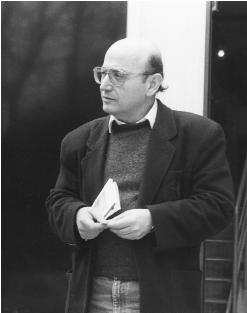
Theodoros Angelopoulos (Θa2;δωρος Αγγελa2;πουλος in Greek) (born April 27, 1935 - died January 24, 2012) was a noted Greek film director.
Angelopoulos studied law in Athens, but after his military service went to Paris to attend the Sorbonne. He soon dropped out to study film at the IDHEC (Institute of Advanced Cinematographic Studies) before returning to Greece. There, he worked as a journalist and film critic.
Angelopoulos began making films after the 1967 coup that began the Greek military dictatorship known as the Regime of the Colonels. He made his first short film in 1968 and in the 1970s began making a series of political feature films about modern Greece: Days of '36 (Meres Tou 36, 1972), The Travelling Players (O Thiassos, 1975) and The Hunters (I Kynighoi, 1977). He quickly established a characteristic style, marked by slow, episodic and ambiguous narrative structures and long takes (The Travelling Players, for example, consists of only 80 shots in about four hours of film). These takes often include meticulously choreographed and complicated scenes involving many actors.
His regular collaborators include the cinematographer Giorgos Arvanitis, and the composer Eleni Karaindrou.
The film critic David Thomson counted Angelopoulos as one of the world's greatest living directors in his book The New Biographical Dictionary of Film.
He died in a freak accident involving a motorcycle on January 24, 2012.
Imdb link: http://imdb.com/name/nm0000766
Filmography:
1. L'altro mare (2012) (unfinished)
2. Mundo Invisível (2011)
3. The Dust of Time (2007)
4. Chacun son cinéma ou Ce petit coup au coeur quand la lumière s'éteint et que le film commence (2007) segment "Trois Minutes"
5. Trilogia I: To Livadi pou dakryzei (2004)
6. Mia aioniotita kai mia mera (1998)
7. Lumière et compagnie (1995)
8. Vlemma tou Odyssea, To (1995)
9. Meteoro vima tou pelargou, To (1991)
10. Topio stin omichli (1988)
11. Melissokomos, O (1986)
12. Taxidi sta Kythira (1984)
13. Athina, epistrofi stin Akropoli (1983) (TV)
14. Chorio ena, katikos enas (1981) (TV)
15. Megalexandros, O (1980)
16. Karkinos peptikou (1980)
17. Kynigoi, Oi (1977)
18. Thiasos, O (1975)
19. Meres tou '36 (1972)
20. Anaparastasi (1970)
21. Ekpombi (1968)
22. Peripeteies me tous Forminx (1965)

Adolfo Aristarain is an Argentine film director whom Variety** has deemed a "master filmmaker."
After leaving Argentina Aristarain started working as assistant director in the Arcente cinema, and then in Europe during his short exile for Mario Camus, Giorgio Stegani and Lewis Gilbert before returning to Argentina in 1974, following the death of Argentine president Juan Perón.

His first 3 films did not receive favorable reviews, but in 1981 Tiempo de revancha (1981) (Time for Revenge) received both critical acclaim and public success. Released in the midst of the so-called Guerra Sucia ("Dirty War"), when Argentina was ruled by a military dictatorship, the film had strong political undercurrents but faced few problems from censors. As Aristarain would later explain, he initially included long, unnecessary sex scenes in the film, "so the censors took five days and questioned things—not politics or ideology but sex. All I had to do was cut a few frames at the end of some scenes, like one of a strip tease. It doesn't hurt the scenes—especially if you made them longer than they should have been." [in Annette Insdorf “Time for Revenge: A Discussion with Adolfo Aristarain”, Cineaste(1983) :17. ]
Back in Spain he directed a mini-series for television, and after a series of aborted projects he had renewed success in Argentina: Un Lugar en el Mundo (1992) (A Place in the World), starring Federico Luppi, with whom he has maintained frequent collaboration.

A Place in the World is a sensitive, beautifully made coming-of-age story, set against a backdrop of Argentinian politics played out on a local scale. Featuring a cast of strong characters, all driven by their deepest beliefs and passions, this is that rare case of a film that's not just lovely - it's lively, too.
It was disqualified in 1993 by the Academy of Motion Picture Arts and Sciences because the film was submitted for consideration (for Best Foreign Movie) by Uruguay (his wife's country), while The Academy claimed it was an Argentine production, and should therefore have been submitted by that country.

He then filmed La Ley de la frontera and Martín (hache) in Spain, also starring Luppi. Aristarain continued with his Argentine-Spanish mixture of actors in Lugares comunes and Roma.

Roma dramatizes with exquisite tenderness and depth the price a widowed mother pays for the unconditional love she has for her only son. In it, Aristarain offers tribute to John Ford's warmth for motherhood when characters attend a retrospective screening of Ford's "The Grapes of Wrath" and witness Henry Fonda's Tom Joad assure Ma Joad (Jane Darwell), "I'll be there."
Aristarain wrote all the scripts of his directed movies, except for the unreleased co-production with Columbia Pictures, The Stranger. He refuses to release the film because he is not content with the result.
Aristarain, who has held Spanish Citizenship since 2003, has received numerous awards for his work, including Golden Seashell and an Academy Award nomination for Un Lugar en el mundo, Best Director award at the Havana Film Festival, and Golden Seashell nomination for Martín (Hache), the First Prize at the Havana Film Festival and the Grand Prix des Amériques award at the Montréal World Film Festival for Tiempo de revancha.
** http://en.wikipedia.org/wiki/Variety_(magazine)
IMDb link: www.imdb.com/name/nm0034899

- Filmography –
01. La parte del león (1978) The Lion's Share
02. La playa del amor (1980)
03. La discoteca del amor (1980) aka The Disco of Love
04. Tiempo de revancha (1981) aka Time for Revenge
05. Últimos días de la víctima (1982) aka Last Days of the Victim
06. "Las aventuras de Pepe Carvalho"
07. The Stranger (1987) aka El extraño
08. Un lugar en el mundo (1992) aka A Place in the World
09. La ley de la frontera (1995)
10. Martín (Hache) (1997) aka Martin (H)
11. Lugares Comunes (2002) aka Common Places
12. Roma (2004)

Béla Tarr (born July 21, 1955 in Pécs, Hungary) is a Hungarian film director and screenwriter, widely considered to be one of the most important auteurs in world cinema. Often described as bleak and mysterious, with an underlying dark sense of humour, Tarr’s films are elaborately staged and intricately orchestrated.

There is a clear division between Tarr’s earlier and more recent work. He began making amateur films at the age of 16, most of which were documentaries, mostly about the life of workers or poor people in urban Hungary. At the age of 22 he made first feature film, Családi tűzfészek (Family Nest), which was influenced by the "Budapest School" or social-realism "documentarist" style. After completing "Családi tűzfészek" Tarr began his studies in the Hungarian School of Theatrical and Cinematic Arts. His films continued in much the same vein with smaller changes in style but by the 1982 adaptation of “Macbeth”, he introduced many of the features for which his later films have been known, moving from close-ups to long shots; a change, which became more evident in the 1985 Őszi almanach (Almanac of Fall), with its stylized color, lighting, and camera work.
With 1988’s Kárhozat (Damnation) began Tarr’s close collaboration with Hungarian novelist László Krasznahorkai , which included Sátántangó (1994) and Werckmeister Harmonies (2000), some of his most critically acclaimed works. Quintessentially cinematic, Tarr’s later films tend to portray worlds inhabited by isolated communities and characters who become vehicles for the metaphysical exploration of the human condition. Long takes and slow camera movements create a unique sense of time and place, resulting in what have been described as atransformative cinematic experiences.
Some of the very few heroic violations of cinematic norms of our times.
~ Susan Sontag
Filmography:
01. Hotel Magnezit (1978)
02. Családi tüzfészek (1979) aka Family Nest
03. Szabadgyalog (1981) aka The Outsider
04. Macbeth (1982)
05. Panelkapcsolat (1982) aka The Prefab People
06. Öszi almanach (1985) aka Almanac of Fall
07. Kárhozat (1988) aka Damnation
08. Utolsó hajó (1990)
09. City Life (1990) (segment "Az utolsó hajó" aka "The Last Boat")
10. Sátántangó (1994) aka Satan's Tango
11. Utazás az alföldön (1995) aka Journey on the Plain
12. Werckmeister harmóniák (2000) aka Werckmeister Harmonies
13. Visions of Europe (2004) (segment "Prologue")
14. A Londoni férfi (2007) aka The Man from London
15. A torinói ló (2011) The Turin Horse
|
|

In 1987 Carlos Reygadas discovered his filmic passion after watching Andrei Tarkovsky's films. He studied Law in Mexico, afterwards he specialized in Armed Conflicts in London and worked for the United Nations.
In 1997 Carlos participated in a film competition in Belgium with his first short film, Maxhumain. Shortly after that, in 1999 he began writing his first long film: Japón, which he didn't begin to shoot until 2001. The film was presented at the Rotterdam Film Festival and received a special metion on the Caméra d'Or award at the Cannes Film Festival as well as the Coral Award of the Havana Film Festival. Japón contains a number of scenes of real animal cruelty and the British Board of Film Classification demanded cuts for its UK release in accordance with the Cinematograph Films (Animals) Act 1937. The excised scenes are described as an unsuccessful attempt to strangle a bird which then stumbles around injured on the ground and a dog being forced to 'sing along' to a song through the application of a painful stimulus.[1] The film also includes an unsimulated scene of a bird being shot down and then killed by having its head torn off, and the (off camera) slaughter of a pig.[2]
In 2004 Carlos Reygadas produced the film Sangre, directed by the young filmmaker Amat Escalante. It was presented at the Cannes Film Festival and won at the Un Certain Regard section. It was also presented in other festivals, such as the Toulouse Film Festival, the International Film Festival Rotterdam and the San Sebastian International Film Festival.
In 2005 Reygadas filmed Batalla en el Cielo, (Battle in Heaven) assisted by Amat Escalante. It competed for the Palme d’Or at the Cannes Film Festival.
IMDB link: http://www.imdb.com/name/nm1196161/
Filmography:
1. Maxhumain (1999)
2. Japón (2002)
3. Filmando 'Batalla en el cielo' (2004)
4. Batalla en el cielo (2005) aka Battle in Heaven
5. Stellet licht (2007) aka Silent Light
6. Revolución (2010)
|
|

Christopher Jonathan James Nolan (born 30 July 1970) is a British-American filmmaker, writer and producer.
Early life
Nolan was born in London and spent his childhood in both London and Chicago. Nolan found an interest in botany and "dicots" early on until he found his father's camera. Nolan began film-making at the age of seven using his father's Super 8 camera and his toy action figures. While living in Chicago as a child, he also made short films with future director and producer Roko Belic.
Nolan was educated at Haileybury College, an independent school at Hertford Heath in Hertfordshire, England, and later studied English literature at University College London while filming several short films in the college film society. The first, Tarantella, was shown in 1989 on Image Union, an independent film and video showcase featured on PBS. A second short film, Larceny, was shown during the 1996 Cambridge Film Festival. Another notable short film was called Doodlebug with Jeremy Theobald who later starred in Following. Christopher Nolan married fellow producer/author Emma Thomas in 1997.
Professional career
Nolan directed his first feature film, Following, in 1996. The film depicts a writer who is obsessed with following random people. Scenes are shown out of chronological order, and as such the viewer becomes disoriented; having to deduce the elements of the story in the same way as the protagonist calculates what is going on around him.
Nolan made the film for just $6,000. He shot it on weekends, over the course of a year, working with friends he had met at the University College London film society. It began to receive notice after premiering at the 1998 San Francisco Film Festival, and was eventually distributed on a limited basis by Zeitgeist in 1999.
As a result of the film's success, Newmarket Films optioned the script for Nolan's next film, Memento.
On the protagonist's apartment door is the classic 'Batman' symbol. Somewhat prophetically, Christopher Nolan went on to direct both Batman Begins and The Dark Knight, casting Jeremy Theobald, Lucy Russell and John Nolan, all actors in Following.
Memento (2000) is a critically acclaimed cult classic and was nominated for both a Golden Globe and an Academy Award (Oscar) for best screenplay.
The movie is based on the short story Memento Mori, written by Christopher's brother, Jonathan Nolan. It follows widower Leonard Shelby (played by English-born Australian actor Guy Pearce) who suffers a head injury and is unable to form new memories. What distinguishes the film is Nolan's technique of presenting events partially in reverse-chronological order and then in chronological order. Using this technique, Nolan forces viewers into the mentally-impaired protagonist's position — also encountering disoriented events.
Nolan had developed this cutting technique in Following. The latter, however, presents a structure in which the three acts are cut together, whereas Memento presents two linear timelines — the primary one running backwards, and an entirely previous timeline running forwards — which are cut together and which meet at the end. This crossing-over is signified by the transition from black and white film stock to color as the timeline transitions from forwards to backwards.
In 2002 Nolan directed Insomnia, an American remake of the 1997 Norwegian film of the same name (although with major changes in both the plot and the nature of the main character). The plot involves two detectives brought to Alaska to assist local authorities in locating a killer. However, the search occurs during the "sunny" season in Alaska, and the film's protagonist, played by Al Pacino, is unable to sleep because of the constant daylight. His sleepless "nights" lead to bad decisions and Nolan's characteristic confusion, for both the protagonist and the viewer. The film also stars Robin Williams and Hilary Swank. The movie was praised by critics as a rare case of a well-done American remake of a European film.
In 1997, Warner Bros Pictures put its Batman franchise on an indefinite hiatus when the fourth installment, Batman and Robin, was released to negative reviews and disappointing box office.
Nolan had said that while he was content with his directing résumé, he had always dreamed of directing a blockbuster. He created his opportunity in 2003 when, together with Blade screenwriter David S. Goyer, he convinced Warner Bros. to take the risk of entrusting the first of a revived Batman series to a relatively unknown director.
The actor selected to play the leading role, Christian Bale, was a favorite choice among movie fans due to his work in movies such as American Psycho and Equilibrium. Batman Begins was released on 15 June 2005 and became a box office hit, ranking as the third biggest blockbuster of that summer. It received a very positive critical and public reception, with many ranking it as superior to even the 1989 version, for instance receiving, according to Rotten Tomatoes, an overall 84% positive review compared to 69% for the Tim Burton film. Strengths of the movie included its dark and intelligent storyline, strong emphasis on character, and the predominant themes of fear and duality. Michael Caine also stars as Bruce's trusted buttler, Alfred Pennyworth. Liam Neeson stars as Ra's Al Ghul, Gary Oldman stars as James Gordon and Morgan Freeman stars as Lucius Fox. Cillian Murphy also stars as the psychological villain of fear, The Scarecrow (a.k.a. Dr. Jonathan Crane), and Katie Holmes portrays Rachel Dawes, Bruce Wayne's childhood friend and love interest.
Batman Begins was a major winner at the 32nd annual Saturn Awards. The film won for Best Fantasy Film, Best Actor for Christian Bale and Best Writing for Nolan and Goyer. The film was also nominated for the Academy Award for Best Cinematography.
The Prestige, released on 20 October 2006, is an adaptation of the Christopher Priest novel about two rival magicians in the 19th century. It reunites Nolan with Batman Begins stars Christian Bale and Michael Caine. Hugh Jackman, Scarlett Johansson, and David Bowie also star. The movie had a mostly positive response from critics and made over $109 million worldwide. The film was co-scripted by his brother, Jonathan Nolan and co-produced with his wife, Emma Thomas.
In the months following The Prestige's release, Nolan made numerous comments suggesting that he would return to direct the sequel to Batman Begins. In late July 2006, the sequel was officially confirmed as The Dark Knight with Nolan at the helm and Heath Ledger joining the cast as The Joker, Batman's arch-nemesis. Actress Katie Holmes, who played the hero's romantic interest in Begins, had been replaced by Maggie Gyllenhaal, whose brother Jake Gyllenhaal auditioned for the role of Bruce Wayne/Batman in 2003. Aaron Eckhart, who turned down the leading role in Memento, plays Harvey Dent/Two-Face. Nolan and his brother Jonathan wrote a script, based on a treatment written by himself and David S. Goyer. The film began production in early 2007 and was released on 16 July 2008 in Australia and 18 July 2008 in the United States, to overwhelming critical acclaim with some critics calling it the greatest comic-book based movie ever made. It has also had enormous box office success, setting the record for the highest-grossing weekend opening in the U.S. with over $158 million and becoming the 2nd highest grossing film of all time. At the 2009 Golden Globe Awards, Christopher Nolan accepted the award for Best Supporting Actor in a Motion Picture on behalf of the deceased Heath Ledger. Nolan is nominated for the Directors Guild of America Award for Best Director for The Dark Knight. While the movie did not receive any nominations for the five major categories at the 81st Academy Awards, it was nominated for a total of eight Oscars, and won two, the Academy Award for Best Sound Editing, and a posthumous Academy Award for Best Supporting Actor for Heath Ledger.
Filmography:
10. The Dark Knight Rises (2012)
9. Inception (2010)
8. The Dark Knight (2008)
7. The Prestige (2006)
6. Batman Begins (2005)
5. Cinema16: British Short Films (2003) (V)
4. Insomnia (2002/I)
3. Memento (2000)
2. Following (1998)
1. Doodlebug (1997) (as Chris Nolan)

Miloš Forman directing Natalie Portman in "Goya's Ghosts"
Jan Tomáš Forman (born February 18, 1932), better known as Miloš Forman, is an actor, screenwriter, professor and two-time Academy Award-winning film director.
Forman was born in Čáslav, Czechoslovakia (present-day Czech Republic) to a Jewish father and a Protestant mother. He was orphaned at a very young age when his parents died at the German concentration camp in Auschwitz; his father was imprisoned due to membership in a Czech Resistance group, his mother imprisoned for dealing in illegal grocery trade.
After the war, Miloš attended King George College public school in the spa town Poděbrady, where his fellow students were Václav Havel and the Mašín brothers. Later on he studied screenwriting at the Academy of Performing Arts in Prague. He directed several Czech comedies in Czechoslovakia. However, in 1968 when the USSR and its Warsaw Pact allies invaded the country to end the Prague Spring, he was in Paris negotiating for the production of his first American film.
The Czech studio for which he worked fired him, claiming that he was out of the country illegally. He moved to New York, where he later became a professor of film at Columbia University and co-chair (with his former teacher František Daniel) of Columbia's film division. One of his proteges was future director James Mangold, whom Forman had advised about scriptwriting.
In spite of initial difficulties, he started directing in his new home country, and achieved success in 1975 with the adaptation of Ken Kesey's novel One Flew Over the Cuckoo's Nest, which won five Academy Awards including one for direction. In 1977, he became a naturalized citizen of the United States. Other notable successes have been Amadeus, which won eight Academy Awards, and The People vs. Larry Flynt for which he received a Best Director Academy Award Nomination and a golden globe win.
Forman's early movies are still very popular among Czechs. Many of the situations and phrases made it into common use: for example, the Czech term zhasnout (to switch lights off) from The Firemen's Ball, associated with petty theft in the movie, has been used to describe the large-scale asset stripping happening in the country during the 1990s.
In 1997 he received the Crystal Globe award for outstanding artistic contribution to world cinema at the Karlovy Vary International Film Festival.
Forman co-starred alongside Edward Norton in the actor's directorial debut Keeping the Faith (2000) as the wise friend to Norton's young, conflicted priest.
In 2006 he received the Hanno R. Ellenbogen Citizenship Award presented by the Prague Society for International Cooperation.
IMDB link: http://www.imdb.com/name/nm0001232/
Flimography:
1. Goya's Ghosts (2006)
2. Man on the Moon (1999)
3. The People vs. Larry Flynt (1996)
4. Valmont (1989)
5. Amadeus (1984)
6. Ragtime (1981)
7. Hair (1979)
8. One Flew Over the Cuckoo's Nest (1975)
9. Visions of Eight (1973) (segment 'The Decathlon')
10. Taking Off (1971)
11. I Miss Sonia Henie (1971)
12. Horí, má panenko (1967) aka Like a House on Fire
13. Dobre placená procházka (1966) (TV) aka A Well-Paid Walk
14. Lásky jedné plavovlásky (1965) aka A Blonde in Love
15. Cerný Petr (1964) aka aka Peter and Pavla
16. Kdyby ty muziky nebyly (1963) aka If There Were No Music
17. Konkurs (1963) aka Talent Competition
18. Laterna magika II (1960) aka Magic Lantern II
Sergei Eisenstein

Sergei Mikhailovich Eisenstein (January 23, 1898 - February 11, 1948) was a Russian director noted for his films Battleship Potemkin and Oktober, both based loosely on a true story and presented in a realistic fashion, causing an immeasurable influence on early documentary directors owing to his innovative use of montage.
Eisenstein was a pioneer in the use of editing. He believed that film editing was more than merely a method used to link scenes together in a movie; he felt that careful editing could actually be used to manipulate the emotions of the audience. He performed long research into this area, and developed what he called "montage". His published books The Film Form and The Film Sense explain his theories of montage, and they have been highly influential to many directors.
In his initial films, Eisenstein did not use professional actors. His narratives eschewed individual characters and addressed broad social issues, especially class conflict. He used stock characters, and the roles were filled with untrained people from the appropriate class backgrounds.
Eisenstein's loyalty to the ideals of Communism brought him into conflict with a number of officials in the ruling regime of Josef Stalin. Stalin was very much aware of the power of motion pictures as a propaganda tool, and he considered Eisenstein to be a controversial figure. Eisenstein's popularity and influence waxed and waned with the success of his films. The Battleship Potemkin was a popular hit worldwide, and its success was a factor in Eisenstein being selected to direct October: Ten Days That Shook The World as part of a grand 10th anniversary celebration of the October Revolution of 1917. However, the film was not nearly as successful as Potemkin.
In 1930 Paramount Pictures invited Eisenstein to Hollywood with a $100.000 contract. He arrived in New York on May 20 and continued to California. Paramount wanted him to make a movie version on Theodore Dreiser's An American tragedy but the disagreements about casting made them part company by October. Josef von Sternberg finished the film.
Eisenstein journeyed to Mexico, where he tried to produce a partly-dramatized documentary entitled Que Viva Mexico!. Before it was finished, Stalin demanded that Eisenstein return to the Soviet Union. Eisenstein gave the unedited footage into the care of novelist Upton Sinclair who was also the movie's main financier, on the understanding that it would be sent after Eisenstein to the Soviet Union at the first available opportunity, with the intention that Eisenstein would edit the film in Moscow. It never arrived. The footage was eventually screened in New York in 1933, in a form edited by producer Sol Lesser without Eisenstein's input, with the title Thunder over Mexico. Since then, numerous films have been assembled from Eisenstein's footage, with varying degrees of fidelity to his intentions.
Eisenstein's foray into the west made Stalin look upon him with a more suspicious eye, and this suspicion would never be completely erased in the mind of the Stalinist elite. Political red tape forced the cancellation of Eisenstein's next two film projects, and an "official" supervisor was appointed to look after Eisenstein during the making of Alexander Nevsky.
His film, Ivan The Terrible, Part I, presenting Ivan IV of Russia as a national hero, won Stalin's approval (and a Stalin Prize), but the sequel, Ivan The Terrible, Part II was not approved of by the government. All footage from the still incomplete Ivan The Terrible: Part III was confiscated, and most of it was destroyed (though several filmed scenes still exist today).
Eisenstein suffered a hemorrhage and died at the age of 50. An unconfirmed legend in film history states that Russian scientists preserved his brain and it supposedly was much larger than a normal human brain...which the scientists took as a sign of genius.
IMDB Link:http://www.imdb.com/name/nm0001178/bio
Filmography:
1. Ivan Groznyy III (1988)
2. ¡Que Viva Mexico! - Da zdravstvuyet Meksika! (1979) aka Que Viva Mexico
3. Eisenstein's Mexican Project (1958) aka Study for a Mexican Film by Eisenstein
4. Ivan Groznyy II: Boyarsky zagovor (1958) aka Ivan the Terrible, Part Two
5. Ivan Groznyy I (1944) aka Ivan the Terrible, Part One
6. Seeds of Freedom (1943)
7. Conquering Cross (1941)
8. Idol of Hope (1941)
9. Land and Freedom (1941)
10. Mexican Symphony (1941)
11. Mexico Marches (1941)
12. Spaniard and Indian (1941)
13. Zapotecan Village (1941)
14. Time in the Sun (1940)
15. The Fergana Canal (1939)
16. Aleksandr Nevskiy (1938) aka Alexander Nevsky
17. Bezhin lug (1937) aka Bezhin Meadow
18. Death Day (1934)
19. Eisenstein in Mexico (1933)
20. Thunder Over Mexico (1933)
21. ¡Que viva Mexico! (1932) (read IMDB for more info)
22. Destrucción de Oaxaca, La (1931)
23. Romance sentimentale (1930) aka Sentimental Romance
24. Staroye i novoye (1929) aka Old and New
25. The Storming of La Sarraz (1929)
26. Oktyabr (1928) aka Ten Days That Shook the World
27. Bronenosets Potyomkin (1925) aka The Battleship Potemkin
28. Stachka (1925) aka Strike
29. Dnevnik Glumova (1923) aka Glumov's Diary
Unlisted Short
Eisenstein: Mei LanFang performing (1935)
Frauennot - Frauenglück (1930)

Vicente Aranda is a Spanish film director, screenwriter and producer.
Due to his refined and personal style, he is one of the most renowned Spanish filmmakers. He started as a founded member of the Barcelona School of Film and became known for bringing contemporary Spanish novels to life on the big screen.
Aranda is famous for exploring difficult social issues and variations on the theme of desire that employs the codes of melodrama. Love as uncontrollable passion, eroticism and cruelty are constant themes in his filmography. The frank examination of sexuality is one of the trademarks of his work, as can be seen in his most internationally successful film: Amantes (1990) (Lovers).
Early life
Vicente Aranda Ezguerra was the youngest son in a large and impoverished family who had emigrated from Aragón to Barcelona twenty years before he was born. The Spanish Civil War, in which his family took the side of the losing Republicans, marked his childhood. Thinking that the war was going to be more bearable in a small town than in Barcelona, the family moved early in the war to Peñalba, his mother's native village. The dire situation there forced them to come back to Barcelona in 1938.
After the war ended, Aranda spent a lot of time in the local movie theatre, much against the wishes of his parents, who took to smelling him on his return for traces of the disinfectant that was sprayed in cinemas of the time. He never finished his studies. At age thirteen, he had to begin to work in order to help his family. He had a number of different jobs in his hometown, trying a multitude of trades before following his brother Palmiro to Venezuela in 1952. He emigrated for economical and political reasons. In Venezuela, Aranda worked as a cargo technician for an American shipping business and later became responsible for programs at NCR. After seven years, he came back to Spain, in 1959.
Wealthy and married upon his return, he had the initial desire to become a novelist, but found that he lacked enough talent as a writer. He fell in with the cultural elite of Catalonia and was encouraged to try his hand at filmmaking, even after being denied access to the School of Cinema in Madrid because he never graduated from high school. In Barcelona and completely self-taught, Aranda found the way to direct his first feature film.
Aranda started directing films late in life, at almost forty and did not reach international success until his 60s; nevertheless, he has had a long and prolific career making twenty-seven films in more than forty years as director. Vicente Aranda is married to Teresa Font, his second wife, editor of his movies since the mid 1980s.

Film career and later life
Aranda made his directorial debut with the low- budget Brillante Porvenir (1964) (Brilliant Future), co directing with screenwriter Román Gubern to avoid problems with the director guild of Spain. Loosely adapted from the Great Gatsby, the film was naive in its appropriation of the aesthetic of the neorealism for a portrait of the Catalan middle class. Brillante Porvenir, cut by censors, was received coldly by public and critics, but it served to redirect Aranda towards the more fantastic ambit of film making.
His second film, Fata Morgana (1965), an unusual work in Spanish Cinema, is an experimental film, based on a script written with Gonzalo Suárez. The film took inspiration for its visual style from television commercials and comic strips. Ignored upon release, Fata Morgana would eventually be recognized for inspiring the particular kitsch aesthetic of the Barcelona School of Film, an avant-garde movement which sought creative renovation of Spanish films.
Aranda’s work over the next decade would reveal much of the same tensions noted in Fata Morgana, namely a polarity between certain artistic pretensions and a virtual style drawn from mass media. In these films, Aranda worked within established film genres with an eye on revising and modernizing them.
Since his first features were not widely seen, Aranda followed up with a commercial film with fantastic and erotic overtones: Las Crueles (1969) (The Exquisite Cadaver). In it, a mysterious woman elaborates a scheme to avenge the death of her girlfriend from a callous publisher. This filmed was plagued with a series of problems: it was long in the making; Aranda suffered an accident during the shooting, which forced him to work from a stretcher and finally he had a legal battle with the producers. It would take Aranda many years to recover ownership of this film. The experience made him found his own production company: Morgana film, which would produce his next six films.
In La Novia Ensangrentada (1972) (The Blood Spattered Bride), a female vampire seeks revenge against all men. A genre film for the cultural elite, that got around the censors by virtue of its incomprehensibility. By Aranda’s own admission he sacrificed conventional coherence for the cinematographic and phenomenological possibilities of each action. The film was distributed internationally in the United States, France and Italy.
Aranda started to employ the codes of melodrama with: Clara es el Precio (1974) (Clara is the Price), an offbeat mix of melodrama, parody and surreal comedy. He cast Amparo Muñoz, Spain’s future Miss Universe, as an innocent adrift in a world without taboo: a young virgin bride, whose infanticide husband is impotent with her alone, and who then pursues a career as a pornographic film actress in order to fund a business project. The film’s imprudence was also its purpose. Like the Surrealists, Aranda’s ability to shock was itself a political statement. “We had lived in a state of consensus and this is fatal for cinema”, he complained, “We have become our own censors and all we want to do is forget, be silent, not speak.”
With the fall of Francos’s regime, the Catalan director was finally able to shoot more daring films like: Cambio de Sexo (1976) (Change of Sex), skillfully tackling the subject of transexuality. This film was the beginning of a long collaboration with Victoria Abril, over the next three decades director and star would be paired in more than ten films that would include major triumphs for both. Made in the period called the transition, Cambio de Sexo is a salient example of the use of transsexualism to reflect social change. The film dramatizes the development of the “destape” – the period in the late 1970s and early 1980s Spain characterized by a much more open portrayal of sex in the press, literature and film.
Cambio de Sexo recounts the story of a young effeminate boy, played by Victoria Abril, who lives in the outskirts of Barcelona and escapes to the city to explore his desire to become a woman. The character of the young man with a sex identity problem is an embodiment of the changes confronted by the two sides of Spain with their opposite extremes of uncompromising orthodoxy and unrestrained anarchy. Cambio de Sexo allured audiences with its controversial theme, a real novelty, and was released to critical acclaim.
The final element in the dominant Aranda style came in 1979 when he made a film adaptation of the popular novel by his fellow Catalan Juan Marsé: La Muchacha de las Bragas de Oro (1980) (Girl with the Golden Panties). In it a Falangist character, writing his memoirs, accommodates his past to the new democratic realities, but he is confronted with his lies by his carefree niece who playfully starts a game of seduction.
Over the next fifteen years, Aranda established himself as Spain’s foremost adapter of popular novels into film. Unlike the more traditional adaptation that stressed their classical literary origins, his choices were usually guided by the centrality of an erotically defined female character, and a contemporary story emphasizing the force of the milieu on the shaping of actions.
Aranda has a very special relationship with literature and a great number of his movies are based on literary works. He has been seen as a director who specializes in adaptations from short narratives to novels, including even biographies. Nevertheless for Aranda, adapting a literary work does not involve complications of faithfulness, or lack of the same, to the original text. For him the novel is a raw material with which to create new forms:
“As for adaptations, I feel very comfortable doing them. I don’t have problem with authorship. I don’t think I am more of an author if I write a screenplay of something I’ve read on the news papers or seen on the street that if I take a novel and make a movie based on its contents.”

Filmography
30 Luna caliente (2009)
29 Canciones de amor en Lolita's Club (2007) aka Lolita's Club
28 Tirante el Blanco (2006) aka The White Knight
27 ¡Hay motivo! (2004) (segment "Técnicas para un golpe de estado")
26 Carmen (2003)
25 Juana la Loca (2001) aka Mad Love
24 Celos (1999) aka Jealousy
23 La mirada del otro (1998) aka The Naked Eye
22 Libertarias (1996) aka Freedomfighters
21 Lumière et compagnie (1995) aka Lumière and Company
20 La pasión turca (1994) aka Turkish Passion
19 Intruso (1993) aka Intruder
18 El amante bilingüe (1993) aka The Bilingual Lover
17 Amantes (1991) aka Lovers
16 "Los jinetes del alba" (5 episodes, 1990) aka Riders of the Dawn
15 Si te dicen que caí (1989) aka If They Tell You I Fell
14 El Lute II: mañana seré libre (1988) aka El lute II
13 El Lute: Camina o revienta (1987) aka Lute: Forge on or Die
12 Tiempo de silencio (1986) aka Time of Silence
11 La huella del crimen: El crimen del Capitán Sánchez (1985) (TV)
10 Fanny Pelopaja (1984) aka Fanny Straw-Top
09 Asesinato en el Comité Central (1982) aka Murder in the Central Committee
08 La muchacha de las bragas de oro (1980) aka Girl with the Golden
07 Cambio de sexo (1977) aka Change of Sex
06 Clara es el precio (1975)
05 The Most Beautiful Animal in the World (1974/I)
04 La novia ensangrentada (1972) aka The Blood Spattered Bride
03 Las crueles (1969) aka The Exquisite Cadaver
02 Brillante porvenir (1965) aka Brilliant Future
01 Fata/Morgana (1965) aka Left-Handed Fate

Anders Thomas Jensen was born on 6th April 1972 in Frederiksværk on Sjælland in Denmark to Carl Benny Jensen and Kirsten Jensen (born Sørensen). He attended the high school in Frederiksværk from 1988 to 1991. In 1990 while still in high school, he wrote and directed 10 år på bagen - 3 år i skyggen (1990) (TV).
He made his film debut in 1996 with the short films Café Hector (1996), Davids bog (1996), Hvileløse hjerte (1996) and the Academy Award nominated Ernst & lyset (1996), which he also directed. The following year Jensen wrote and directed Wolfgang (1997), which also earned an Academy Award nomination for best short film. He also made a rare appearance in front of the camera in Royal Blues (1997). Baby Doom (1998) and Albert (1998), both released in 1998, were the first feature films with screenplay co-written by Jensen.
After being nominated two previous years Jensen finally won in 1999 an Oscar for best short film with Valgaften (1998). He followed it with writing the screenplay for two successful films in 1999, Mifunes sidste sang (1999) and I Kina spiser de hunde (1999). Jensen was nominated for a Robert for the both films, but neither won. Mifune, directed by Søren Kragh-Jacobsen was the third dogme film. I Kina spiser de hunde (In China They Eat Dogs), directed by Lasse Spang Olsen and starring Kim Bodnia, was the first of typical Jensen screenplays with an original mixture of humour and action. The formula was very effective and the film was a huge hit in Denmark. In a way it created a new genre, Danish action comedies, as it spawned several imitations as well as a prequel three years later. In 2000 Jensen co-wrote the screenplay for Dykkerne (2000) and The King Is Alive (2000), the fourth dogme-film which is a story about a group of people who decides to stage Shakespeare's King Lear in the desert.
After having written screenplays for films in various genres, in 2000 he also his feature film debut as a director with Blinkende lygter (2000). Blinkende lygter (Flickering Lights) tells the story of four small time crooks from Copenhagen who steal 4,000,000 DKR from a gangster boss. Unfortunately their escape route won't take them further than the countryside before the car breaks down. That leads them to renovate an old guesthouse while tring to lay low. With Denmark's best talents Søren Pilmark, Ulrich Thomsen, Mads Mikkelsen, Nikolaj Lie Kaas and Iben Hjejle, it was a huge blockbuster hit in Denmark and also gained interest abroad. Blinkende lygter also gained a Bodil nomination for the best picture of the year, a Robert nomination for best screenplay and won the audience award at the Robert festival. By now already an established name on the Danish movie scene he wrote the screenplays to Grev Axel (2001), made an uncredited contribution to Fukssvansen (2001), Lone Scherfig's Wilbur Wants to Kill Himself (2002) and Susanne Bier's celebrated Elsker dig for evigt (2002) highlighted by strong performances from Mads Mikkelsen, Nikolaj Lie Kaas and Paprika Steen. The screenplay of Elsker dig for evigt (Open Hearts) also showed a completely different side of him. In 2002 he also wrote the screenplay for Lasse Spang Olsen's Gamle mænd i nye biler (2002), the prequel to In China They East Dogs. Jensen received his fourth Robert nomination for the screenplay of Gamle mænd i nye biler (Old Men In New Cars).
Jensen then wrote and directed Grønne slagtere, De (2003). With outstanding performances by Nikolaj Lie Kaas and Mads Mikkelsen, Jensen contributed yet another characteristic story of two butchers with very unorthodox methods. This time Jensen was for De Grønne slagtere (The Green Butchers) nominated for both screenplay and direction at the Robert Festival. He also wrote the screenplays for Søren Kragh-Jacobsen's Skagerrak (2003) and Rembrandt (2003). Skagerrak tells the story of Danish Marie (Iben Hjejle) who finds happiness when she least expects it as she is offered to be a surrogate mother in Northern Scotland. Rembrandt on the other hand continues the adventures of Danish small time crooks, as they by mistake steal a painting by Rembrandt which causes them more problems that they ask for. In 2004 Jensen wrote the screenplay for Susanne Bier's Brødre (2004). Brødre (Brothers), starring Connie Nielsen, Ulrich Thomsen and Nikolaj Lie Kaas is a story of two brothers whose lives alter in many ways when one is sent to war in Afghanistan and the other one takes his place in the brother's family. For Brothers Jensen finally won a Robert for best screenplay. In February 2005 premiered Solkongen (2005), directed by Tomas Villum Jensen, and followed by Adams æbler (2005) in April 2005. Jensen's third directorial effort Adams æbler is written and directed by himself and stars once again Mads Mikkelsen, Nikolaj Lie Kaas and Ulrich Thomsen. His next contribution will be Efter brylluppet (2006) (After the Wedding), which will be directed by Susanne Bier and with Mads Mikkelsen and Rolf Lassgård in leading roles. Efter brylluppet is due to be released in March 2006.
IMDB link: http://imdb.com/name/nm0421314/
Filmography:
1. Adams æbler (2005) aka Adam's Apples
2. Grønne slagtere, De (2003) aka The Green Butchers
3. Blinkende lygter (2000) aka Flickering Lights
4. Valgaften (1998) aka Election Night
5. Wolfgang (1997)
6. Ernst & lyset (1996)

Manoel de Oliveira
Date of Birth: 11 December 1908, O Porto, Portugal
Biography
Manoel de Oliveira was born in Porto, Portugal on December 11, 1908, to Francisco José de Oliveira and Cândida Ferreira Pinto. His family were wealthy industrialists.
Oliveira attended school in Galicia, Spain and his goal as a teenager was to become an actor. He enrolled in Italian film-maker Rino Lupo's acting school at age 20, but later changed his mind when he saw Walther Ruttmann's documentary Berlin: Symphony of a City. This prompted him to direct his first film, also a documentary, titled Douro, Faina Fluvial (1931).
He also has the distinction of having acted in the second Portuguese sound film, A Canção de Lisboa (1933).
His first feature film came much later, in 1942. Aniki-Bóbó, a portrait of Oporto's street children, was a commercial failure when it opened, and its merit only came to be recognised over time[citation needed]. This drawback forced Oliveira to abandon other film projects he was involved in, and to dedicate himself to running his family vineyard. He re-emerged onto the film scene in 1956 with The Artist and the City, a work that marked a turning point in Oliveira's conception of the cinema.
In 1963, O Acto de Primavera (The Rite of Spring), a documentary depicting an annual passion play, marked a turning point for his career. This was shortly followed by A caça (The Hunt), a grim feature film that contrasted with the happy tones of his previous documentary. Despite the widespread acclaim garnered by both films, he would not return to the director's seat until the 1970s. Since 1990 (when he turned 82), he has made at least one film each year. His most recent film, Christopher Columbus - the Enigma, was shot partly in New York and completed in 2007; it is currently touring the United States.
Oliveira claims to direct movies for the sheer pleasure of doing it, regardless of critical reaction. He maintains a quiet life away from the spotlights, despite multiple honours such as those of the Cannes, Venice and Montréal film festivals. He has been awarded two Career Golden Lions in 1985 and 2004 and a golden palm for his lifetime achievements in 2008.
IMDB Link: http://www.imdb.com/name/nm0210701/
Filmography:
01. Douro, Faina Fluvial (1931)
02. Estátuas de Lisboa (1932)
03. Os Últimos Temporais: Cheias do Tejo (1937)
04. Miramar, Praia das Rosas (1938)
05. Já se fabricam automóveis em Portugal (1938)
06. Famalicão (documentary, 1941)
07. Aniki-Bóbó (1942)
08. O Pintor e a Cidade (1956) aka The Artist and the City
09. O Coração (1958)
10. O Pão (1959)
11. Acto de Primavera (1963) aka The Rite of Spring
12. A Caça (1964) aka The Hunt
13. Villa Verdinho: Uma Aldeia Transmontana (1964)
14. As Pinturas do Meu Irmão Júlio (1965)
15. O Passado e o Presente (1971)
16. Benilde ou a Virgem Mãe (1975) aka Benilde or the Virgin Mother
17. Amor de Perdição (1978)
18. Francisca (1981)
19. Visita ou Memórias e Confissões (1982)
20. Lisboa Cultural (1983)
21. Nice... À Propos de Jean Vigo (1983)
22. Le Soulier de Satin (1985)
23. Mon Cas (1987)
24. A Propósito da Bandeira Nacional (1987)
25. Os Canibais (1988)
26. Non, ou A Vã Glória de Mandar (1990)
27. A Divina Comédia (1991)
28. O Dia do Desespero (1992)
29. Vale Abraão (1993)
30. A Caixa (1994)
31. O Convento (1995)
32. Party (1996)
33. Viagem ao Princípio do Mundo (1997)
34. Inquietude (1998)
35. La Lettre (1999)
36. Palavra e Utopia (2000)
37. Je Rentre à la Maison (2001)
38. Porto da Minha Infância (2001)
39. O Princípio da Incerteza (2002)
40. Momento (2002)
41. Um Filme Falado (2003)
42. O Quinto Império: Ontem Como Hoje (2004)
43. Espelho Mágico (2005)
44. Do Visível ao Invisível (2005)
45. Belle Toujours (2006)
46. O Improvável não é Impossível (2006)
47. Cristóvão Colombo - O Enigma (2007)
48. Vitral e a Santa Morta, O (2008)
49. Romance de Vila do Conde (2008)
50. Singularidades de uma Rapariga Loura (2009) aka Eccentricities of a Blonde-haired Girl
51. O Estranho Caso de Angélica (2010) aka The Strange Case of Angelica
52. Painéis de São Vicente de Fora - Visão Poética (2010)
53. A Missa do Galo (2011)
54. Mundo Invisível (2011) segment "Do Visível ao Invisível"
55. Gebo et l'ombre (2012) aka Gebo and the Shadow

